
AI Virtual Receptionist: Transform Your Business Calls
The modern business landscape demands constant availability and flawless customer service. An ai virtual receptionist has emerged as a transformative solution that enables companies to maintain professional call handling around the clock without the traditional overhead of human staff. These AI-powered systems combine natural language processing, machine learning, and business intelligence to create seamless caller experiences that rival and often exceed traditional receptionist capabilities. As businesses navigate increasing call volumes and customer expectations in 2026, understanding how to deploy and optimize an ai virtual receptionist has become a strategic imperative.

Understanding AI Virtual Receptionist Technology
An AI virtual receptionist represents the convergence of several advanced technologies working in concert to manage incoming calls. At its core, the system uses automatic speech recognition (ASR) to convert caller speech into text, natural language understanding (NLU) to interpret intent and context, and text-to-speech (TTS) to generate natural-sounding responses. Unlike simple interactive voice response (IVR) systems that force callers through rigid menu trees, modern AI receptionists engage in dynamic conversations that adapt to each caller's specific needs.

The sophistication of these systems has improved dramatically. According to Forrester's analysis of conversational AI platforms, the integration of large language models has enabled virtual receptionists to handle complex, multi-turn conversations that would have stumped earlier systems. They can now understand context, remember previous interactions, and make nuanced decisions about call routing and response selection.
Key Components of AI Receptionist Systems
The architecture of an effective ai virtual receptionist includes several critical layers:
Intent Recognition Engine that identifies what the caller wants to accomplish
Knowledge Base Integration that connects to company information, schedules, and databases
Workflow Automation that executes actions like booking appointments or updating CRM records
Intelligent Routing Logic that determines when and how to escalate to human team members
Analytics Dashboard that tracks call patterns, resolution rates, and system performance
These components must work seamlessly together. The system needs access to your business workflows and data to provide accurate information and take meaningful action on behalf of callers.
Business Benefits and ROI
Implementing an ai virtual receptionist delivers measurable improvements across multiple operational dimensions. The most immediate benefit is cost reduction. A traditional receptionist costs between $30,000 and $45,000 annually when factoring in salary, benefits, and overhead. An AI solution typically costs a fraction of that amount while providing 24/7 coverage that would require multiple full-time employees to match.
Quantifiable Performance Improvements
MetricTraditional ReceptionistAI Virtual ReceptionistAvailability40 hours/week168 hours/weekCall Handling Capacity1 call at a timeUnlimited simultaneous callsAverage Answer Time3-5 ringsInstant (0-1 ring)ConsistencyVariable100% consistentLanguage Support1-2 languages50+ languages
Beyond cost savings, an ai virtual receptionist improves customer satisfaction through reduced wait times and consistent service quality. Callers receive immediate attention regardless of when they call or how many others are trying to reach your business simultaneously. This elimination of busy signals and hold times directly impacts customer perception and conversion rates.
The system also captures valuable data from every interaction. You gain insights into peak call times, common customer questions, reasons for calls, and conversion patterns that help optimize both the AI system and your broader business operations.
Implementation Strategies for Maximum Impact
Successful deployment of an ai virtual receptionist requires careful planning and phased rollout. Begin by mapping your current call handling processes and identifying the most common call types and outcomes. Most businesses find that 60-80% of incoming calls follow predictable patterns that an AI system can handle autonomously.
Step-by-Step Deployment Approach
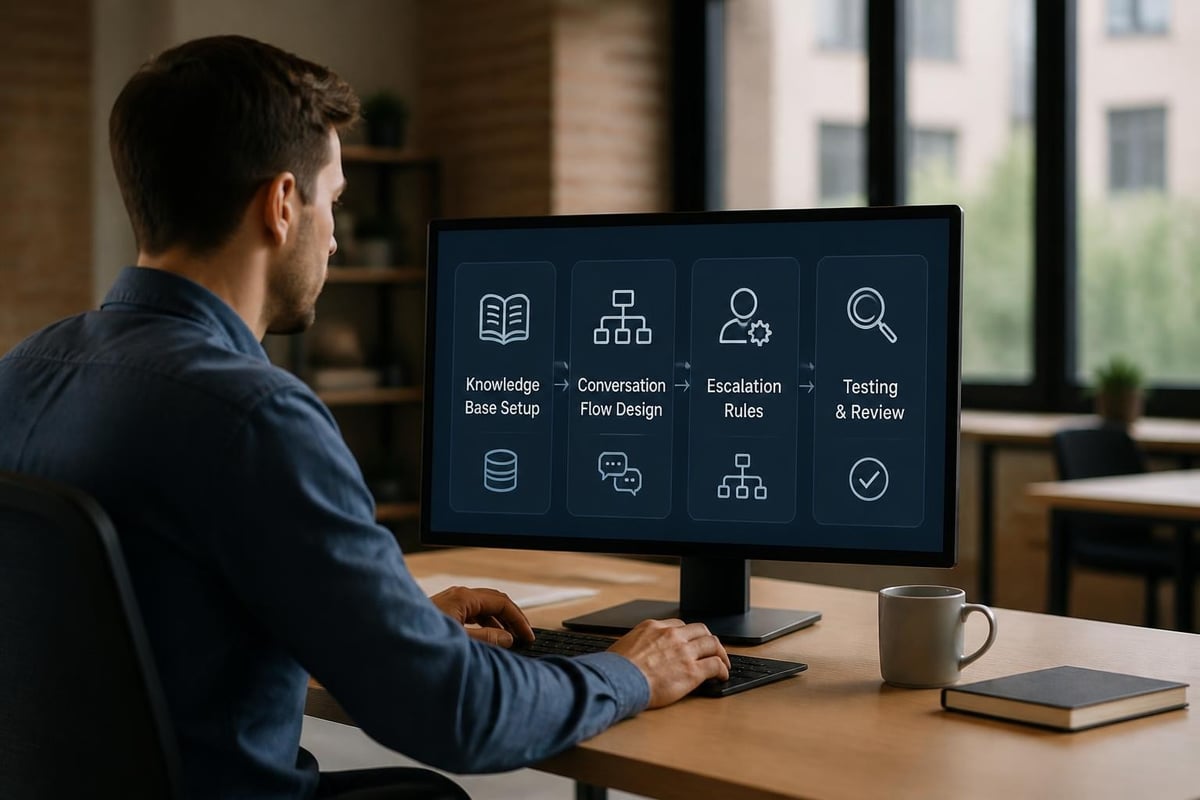
Audit Current Call Volume and Types - Record and categorize two weeks of incoming calls to understand patterns
Define Success Criteria - Establish metrics for answer rate, resolution rate, and caller satisfaction
Configure Knowledge Base - Input business information, FAQs, team schedules, and service details
Design Conversation Flows - Map out how the AI should handle each common call type
Set Escalation Rules - Determine which scenarios require human intervention
Test with Internal Calls - Have team members make test calls to identify gaps
Launch with Monitoring - Go live while actively monitoring calls and making adjustments
Iterate Based on Data - Use analytics to continuously refine performance
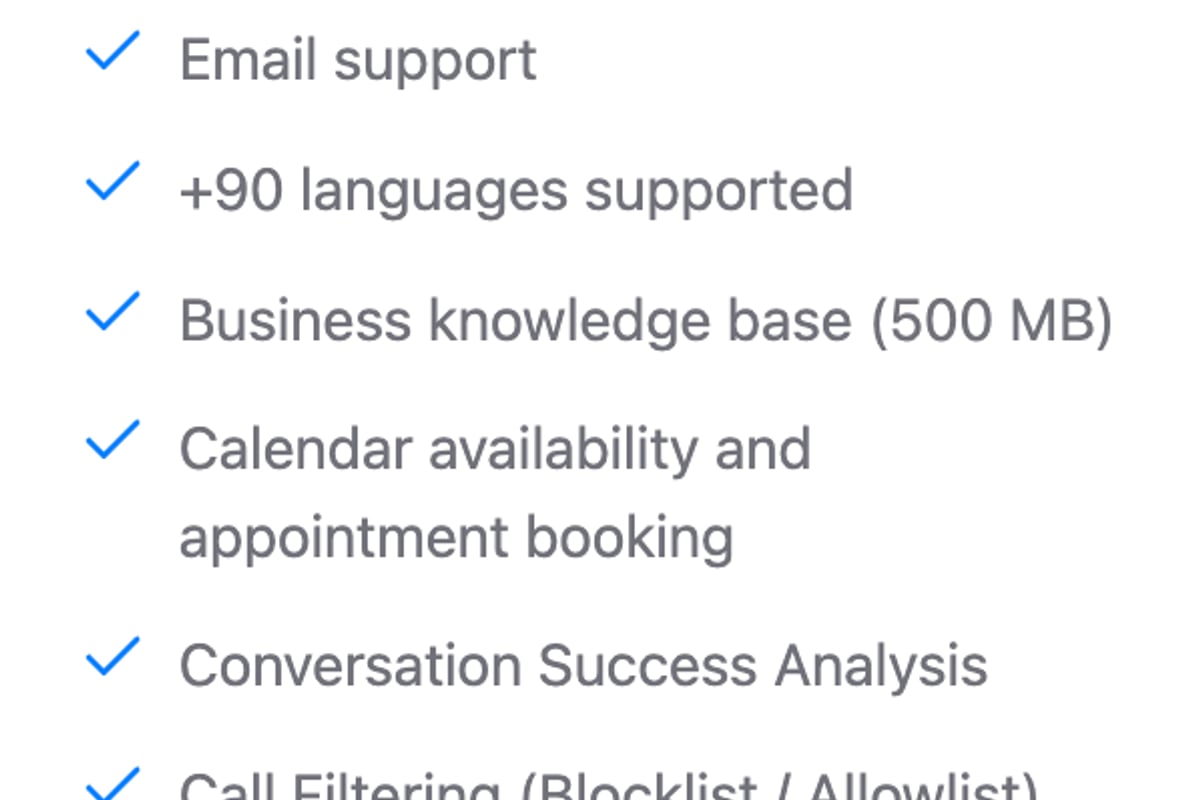
For businesses just beginning their AI journey, starting with a Basic Plan allows you to deploy your first AI receptionist or inbound call agent without overwhelming complexity. This approach lets you prove value before expanding to more sophisticated use cases.
The initial configuration phase typically takes 2-4 weeks depending on business complexity. During this period, focus on training the system with your specific terminology, common caller questions, and desired outcomes. The more context you provide about your business operations, the more effectively the ai virtual receptionist can serve your callers.
Advanced Capabilities and Use Cases
Modern AI virtual receptionists extend far beyond simple call answering. They serve as intelligent business assistants that execute complex workflows based on caller needs. When a customer calls to schedule an appointment, the system checks real-time availability, books the slot, sends confirmation messages, and updates your calendar-all within a single conversation.
Industry-Specific Applications
Different sectors leverage AI receptionist technology in specialized ways:
Healthcare Practices: Handle appointment scheduling, prescription refills, insurance verification, and symptom triage. The system can identify urgent situations requiring immediate human attention while efficiently managing routine requests.
Legal Firms: Qualify potential clients, schedule consultations, gather case information, and route calls to the appropriate attorney based on practice area and availability.
Service Businesses: Process service requests, provide quotes based on service type and location, schedule technician visits, and send automated follow-up communications.
E-commerce Companies: Handle order status inquiries, process returns, answer product questions, and escalate complex issues to customer service teams.
The system's ability to integrate with existing business tools amplifies its value. By connecting to your CRM, scheduling software, payment processors, and other platforms, the ai virtual receptionist becomes an active participant in your operational ecosystem rather than an isolated communication tool.
Security, Privacy, and Compliance Considerations
Deploying an ai virtual receptionist requires careful attention to data protection and regulatory compliance. These systems process sensitive customer information including names, contact details, medical information, financial data, and business-specific details that require robust security measures.
Key security considerations include end-to-end encryption of voice data, secure storage of conversation transcripts, access controls for system configuration, and audit logs of all interactions. Organizations must also address privacy regulations specific to their jurisdiction and industry. Healthcare providers must ensure HIPAA compliance, financial services need to meet PCI DSS requirements, and European operations must adhere to GDPR standards.
According to NIST guidance on cybersecurity and AI systems, organizations should implement risk management frameworks specifically designed for AI deployments. This includes regular security assessments, data minimization practices, and clear policies around data retention and deletion.
Research published in academic reviews of conversational AI security highlights that user trust depends heavily on transparent privacy practices. Informing callers that they're speaking with an AI system, explaining how their data will be used, and providing opt-out options all contribute to positive reception and regulatory compliance.
Data Governance Best Practices
Implement role-based access controls limiting who can view call recordings and transcripts
Establish clear data retention policies aligned with business needs and legal requirements
Use anonymization techniques when analyzing call data for performance improvements
Conduct regular security audits of the AI platform and its integrations
Maintain detailed documentation of data flows and processing activities
Train staff on proper handling of information accessed through the AI system
Platform providers should offer detailed documentation about their security architecture, compliance certifications, and data handling practices. Review these materials carefully and ensure they align with your organization's security policies and regulatory obligations.
Integration with Human Teams
The most effective implementations of AI virtual receptionist technology recognize that AI and human staff should work as complementary partners rather than replacements. As Harvard Business Review research demonstrates, generative AI enhances customer service roles by handling routine tasks and allowing human agents to focus on complex, high-value interactions.

Design your ai virtual receptionist to recognize situations requiring human judgment, empathy, or specialized expertise. When escalation occurs, the system should transfer the caller seamlessly while providing the human agent with complete context including the caller's identity, previous interactions, and the specific issue at hand.
Creating Effective Escalation Protocols
Scenario TypeAI HandlesEscalate to HumanRoutine Information✓Standard Appointments✓FAQ Questions✓Angry/Frustrated Caller✓Complex Problem Solving✓Sales Negotiation✓Policy Exceptions✓
Train your team to leverage the AI system's data collection capabilities. When they receive an escalated call, they have immediate access to everything the caller has already shared, eliminating frustrating repetition and demonstrating organizational efficiency.
Measuring Success and Continuous Improvement
Deploying an ai virtual receptionist creates opportunities for unprecedented visibility into your communication operations. Establish key performance indicators (KPIs) that align with your business objectives and monitor them consistently.
Essential Metrics to Track:
Call answer rate (percentage of calls answered by the AI)
First-call resolution rate (issues resolved without escalation)
Average handling time per call type
Caller satisfaction scores (via post-call surveys)
Escalation rate and reasons for escalation
Conversion rates (appointments booked, sales made, etc.)
Cost per call compared to traditional methods
After-hours call volume and handling
Analyze these metrics monthly to identify improvement opportunities. If the escalation rate for a particular call type is high, that indicates a need for additional training or workflow refinement. If caller satisfaction drops at certain times, investigate whether system performance degrades during peak periods.
The AI system should improve continuously through machine learning and regular updates to its knowledge base. As your business offerings change, update the system immediately to ensure accurate information. When new call patterns emerge, create conversation flows to handle them efficiently.
Optimization Cycle
Review performance data and identify underperforming areas
Analyze call recordings to understand where the system struggles
Update knowledge base, conversation flows, or escalation rules
Test changes with sample calls before full deployment
Monitor impact on key metrics
Document improvements and share learnings with stakeholders
Many businesses discover additional use cases after initial deployment. An ai virtual receptionist that initially handles basic call answering might expand to support outbound appointment reminders, follow-up calls, customer satisfaction surveys, or proactive service notifications.
Future-Proofing Your Communication Strategy
The capabilities of AI voice technology continue to expand rapidly. Systems deployed in 2026 offer natural conversations that many callers cannot distinguish from human interactions. Looking ahead, expect even more sophisticated features including enhanced emotional intelligence, multilingual conversations within a single call, predictive call routing based on caller history, and deeper integration with business intelligence platforms.
Position your organization to benefit from these advancements by selecting an ai virtual receptionist platform with a clear innovation roadmap and regular feature updates. Avoid proprietary systems that lock you into limited functionality or require expensive customization for basic changes.
Consider how the AI receptionist fits into your broader digital transformation strategy. The same conversational AI technology that handles phone calls can extend to webchat, SMS messaging, and social media interactions, creating a consistent omnichannel experience. Platforms that support multiple channels allow you to maintain a unified customer communication strategy as your preferred channels evolve.
Staff Training and Change Management
Successful adoption of an ai virtual receptionist requires buy-in from your entire team. Some staff members may feel threatened by automation, while others might resist learning new tools. Address these concerns proactively through transparent communication and inclusive implementation processes.
Effective Change Management Steps:
Involve front-line staff in the system configuration process
Clearly communicate that the AI enhances rather than replaces their roles
Provide comprehensive training on monitoring the AI and handling escalated calls
Celebrate early wins and share positive customer feedback
Create channels for staff to suggest improvements
Recognize team members who effectively leverage the AI system
Many organizations find that receptionists and customer service staff become the strongest advocates for AI systems once they experience the benefits firsthand. By eliminating repetitive inquiries and reducing interruptions, the technology allows them to focus on more engaging and valuable work.
Explore additional capabilities by reviewing what Neuraly's platform offers in terms of business knowledge integration and workflow automation. Understanding the full spectrum of features helps you maximize your investment and identify new opportunities for operational improvement.
Selecting the Right AI Virtual Receptionist Platform
The market for AI receptionist solutions has expanded significantly, with options ranging from simple automated attendants to sophisticated platforms that execute complex business workflows. Evaluate potential providers based on several critical factors.
Key Selection Criteria:
Conversation Quality: Test the system with realistic scenarios to assess naturalness and accuracy
Integration Capabilities: Verify compatibility with your existing CRM, scheduling, and business tools
Customization Options: Ensure you can configure the system for your specific business needs
Scalability: Confirm the platform can grow with your business without performance degradation
Analytics and Reporting: Review the depth and usability of performance insights
Security and Compliance: Validate certifications and data handling practices
Support and Training: Assess the quality of onboarding assistance and ongoing support
Pricing Model: Understand total cost including setup, monthly fees, and per-call charges
Request demonstrations with your actual use cases rather than generic examples. Provide sample call scenarios and business context to see how the system performs with your specific requirements. The best vendors will invest time understanding your needs and proposing tailored configurations.
Review customer testimonials and case studies from businesses similar to yours. Implementation experiences vary significantly across industries, company sizes, and use cases. A platform that works well for a dental practice might not suit a law firm or e-commerce business.
For comprehensive information on platform capabilities and deployment options, visit the Neuraly features page to understand how modern AI voice intelligence handles diverse business communication needs.
An ai virtual receptionist transforms how businesses manage incoming calls by delivering consistent, professional service 24/7 while reducing operational costs and improving customer satisfaction. The technology has matured to handle complex conversations and execute meaningful business workflows autonomously, making it a viable solution for organizations of all sizes. Neuraly provides an AI platform specifically designed to transform business phone lines into always-on customer experiences, intelligently handling calls, understanding customer needs, and routing complex requests to your team when needed.
#AI #Virtual Receptionist